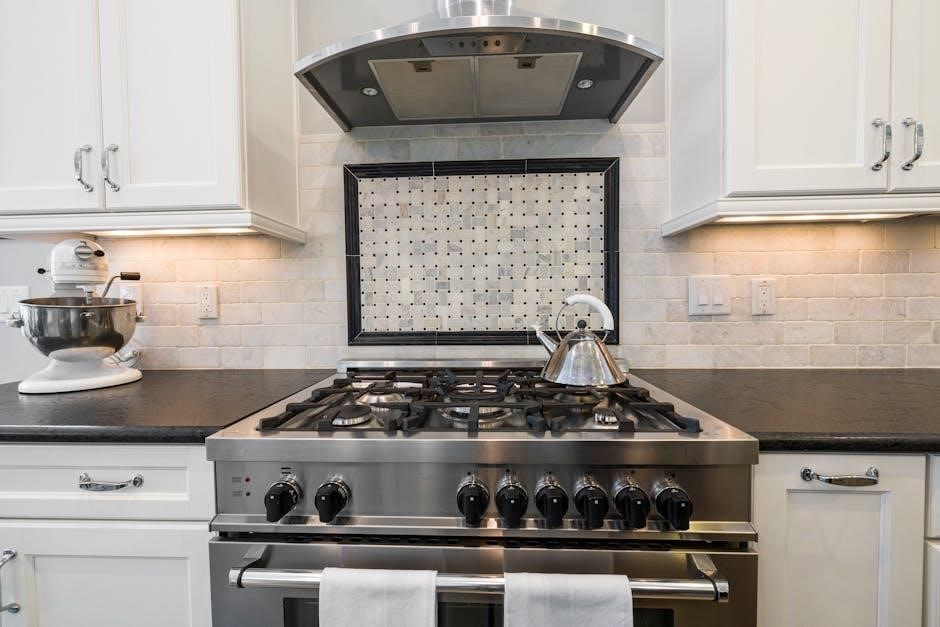
Kenmore Gas Range Owners Manual: A Comprehensive Guide
Welcome! This manual provides essential guidance for operating and maintaining your Kenmore gas range, model 74343, a convection gas model priced around $1,400.
Congratulations on selecting a Kenmore gas range! This appliance is designed for reliable performance and convenient cooking. This manual – specifically for model 74343 – serves as a comprehensive resource, guiding you through safe operation, essential maintenance, and troubleshooting.
Kenmore ranges are known for their quality and features, and the 74343 is no exception, offering convection baking alongside standard gas cooking capabilities. Understanding your range’s features, as detailed within this guide, will maximize your cooking experience.
Before first use, please carefully review the safety precautions outlined in this manual to ensure a secure and enjoyable cooking environment. Access to manuals, including this one, can sometimes be found through resources like Manualzilla and the Internet Archive.
Understanding Model Numbers (e.g., 74343)
Your Kenmore gas range’s model number, such as 74343, is crucial for identifying specific features, ordering replacement parts, and accessing the correct documentation. This five-digit number provides key information about your appliance’s configuration and manufacturing details.
The model number is typically located on a label affixed to the range’s frame. It’s often found behind the oven door, on the side of the cooktop, or on the back panel. Referencing this number when contacting Kenmore customer support or searching for online resources – like those available through Manualzilla – ensures you receive accurate assistance.
Knowing your model number allows you to pinpoint specific instructions and troubleshooting steps relevant to your Kenmore gas range, maximizing the usefulness of this owner’s manual and other support materials.
Safety Precautions
Important Safety Information: Your Kenmore gas range utilizes flammable gas and generates high temperatures. Prioritize safety during operation; Ensure adequate ventilation to prevent carbon monoxide buildup – a potentially fatal hazard. Never use the range for heating a room.
Keep flammable materials, such as paper, plastics, and aerosol cans, away from burners and the oven. Supervise children closely when the range is in use. The exterior surfaces become hot during operation and retain heat for a period afterward.
Regularly inspect the gas supply connections for leaks. If you smell gas, immediately evacuate the area, and contact your gas company or emergency services. Do not attempt to operate the range if a gas leak is suspected.
Carbon Monoxide Warnings
Critical Safety Alert: Gas ranges produce carbon monoxide (CO), an odorless, colorless, and potentially deadly gas. Proper ventilation is essential to prevent CO buildup. Never block or obstruct the range’s ventilation openings.
Install a carbon monoxide detector near the kitchen, following the manufacturer’s instructions for placement and maintenance. Regularly test the detector’s functionality. Symptoms of CO poisoning include headache, dizziness, nausea, and confusion.
If the CO detector alarms, immediately evacuate everyone from the home and call emergency services. Do not re-enter until the source of the CO has been identified and corrected by a qualified professional. Ignoring CO warnings can be fatal.
Flammable Materials & Ventilation
Important Safety Instructions: Keep flammable materials – such as paper, plastic, curtains, and aerosol sprays – well away from the Kenmore gas range. These items can ignite if exposed to open flames or excessive heat. Always maintain a clear and safe cooking area.
Ensure adequate ventilation while using the range. Operate the range with a functioning range hood that vents to the outside. This helps remove combustion byproducts and prevents grease buildup. Never use the oven for storage, as it can become dangerously hot.
Avoid wearing loose-fitting clothing while cooking. If clothing catches fire, STOP, DROP, and ROLL to extinguish the flames. Regularly inspect the gas supply line for leaks or damage.
Child Safety Considerations
Protecting Children is Paramount: Never leave children unattended near the Kenmore gas range. The cooktop and oven surfaces become extremely hot during and after use, posing a severe burn risk. Implement preventative measures to ensure their safety.
Utilize the rear burners whenever possible when cooking with children present. This minimizes their reach to hot surfaces. Teach children about the dangers of touching the range and oven controls. Consider installing oven door locks to prevent accidental opening.
Keep pot handles turned inward to avoid accidental bumping or grabbing. Regularly check the cooktop for spills or debris that could attract children. Supervise children closely in the kitchen at all times.
Operating Your Kenmore Gas Range
Let’s get cooking! This section details the ignition system, surface burner usage, and oven operation for your Kenmore gas range, model 74343.
Ignition System – How it Works
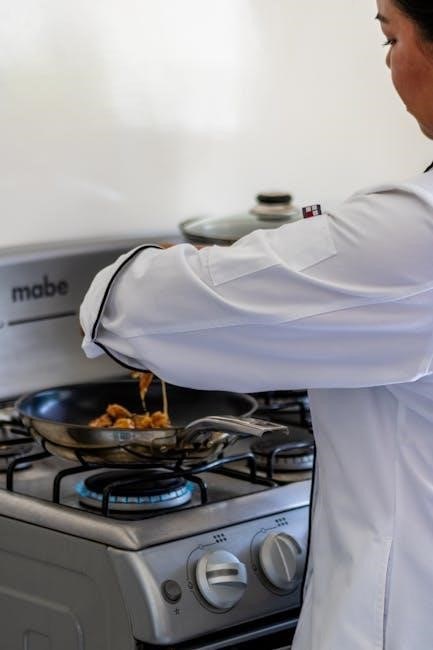
Understanding the Spark: Your Kenmore gas range utilizes an electronic ignition system, eliminating the need for standing pilot lights. When you turn a surface burner control knob, it initiates a spark at the burner port. This spark ignites the gas flowing from the burner, creating a flame.
Key Components: The system relies on a spark module, igniter, and gas valve. The spark module generates the high-voltage spark, while the igniter delivers it to the burner. The gas valve controls the gas flow. If the flame doesn’t ignite within a few seconds, the system automatically shuts off the gas supply for safety.
Troubleshooting Tip: If a burner fails to light, ensure the power cord is securely plugged in. A clicking sound indicates the igniter is working; however, no flame suggests a gas supply issue or a faulty burner.
Using the Surface Burners
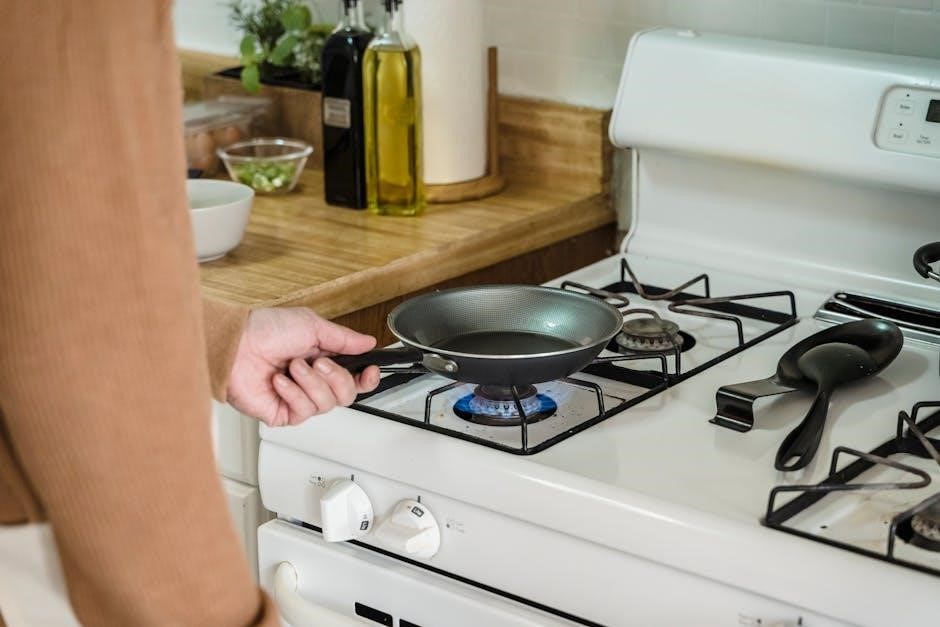
Operating Your Burners: To activate a surface burner, simply press and turn the control knob to the desired flame setting. The range offers a range of flame sizes, from low simmer to high heat. Always start with a lower setting and adjust as needed for optimal cooking results.
Flame Characteristics: A proper flame should be blue with a slight yellow tip. A completely yellow flame indicates incomplete combustion and may require burner cleaning. Ensure burners are properly seated and aligned for even flame distribution.
Important Reminder: Never leave a burner unattended while in use. Always turn burners off completely when finished cooking. Regular cleaning will maintain optimal burner performance and safety.
Adjusting Flame Size
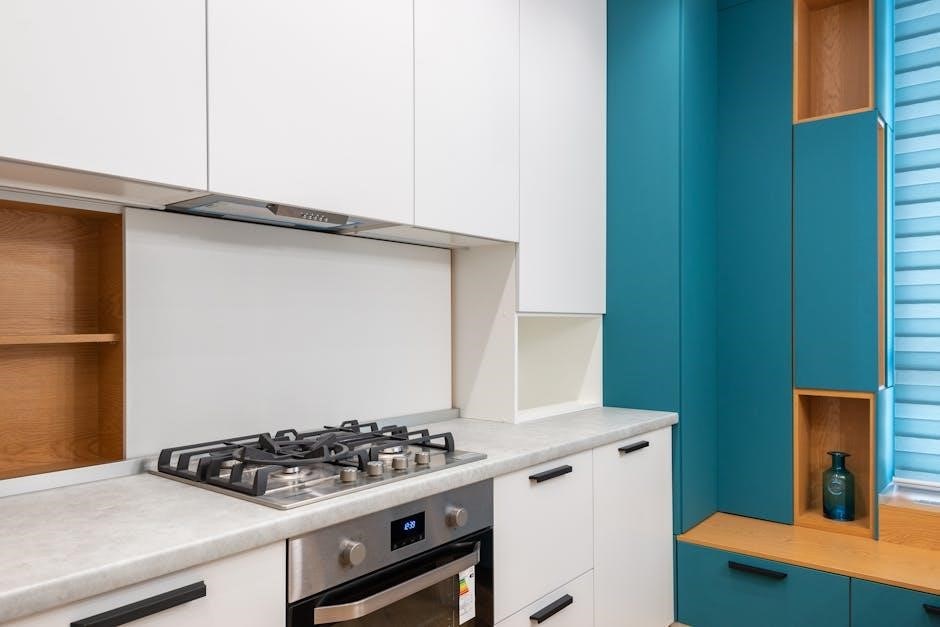
Precise Control: Your Kenmore gas range allows for precise flame adjustment using the control knobs located beneath each burner. Turning the knob clockwise increases the flame size, while turning it counterclockwise decreases it. Experiment to find the ideal flame for different cooking tasks.
Simmering & Boiling: For delicate simmering, use the lowest flame setting. For rapid boiling, utilize the highest setting. Observe the food closely and adjust the flame accordingly to prevent burning or undercooking. Consistent heat control is key.
Visual Cue: A blue flame with a slight yellow tip is optimal. If the flame is predominantly yellow, it may indicate a need for burner cleaning to ensure efficient combustion and proper heat distribution.
Burner Cleaning & Maintenance
Regular Cleaning: Maintaining clean burners is crucial for optimal performance. Food spills and debris can obstruct gas flow, leading to uneven heating or difficulty igniting. After each use, allow the burners to cool completely before cleaning.
Cleaning Process: Remove the burner caps and heads. Wash them with warm, soapy water, and a non-abrasive sponge. For stubborn residue, soak them briefly. Ensure the gas ports are clear of obstructions using a thin wire or needle.
Dry Thoroughly: Completely dry all components before reassembling. A yellow flame indicates incomplete combustion, often due to dirty burners, requiring immediate attention and cleaning.
Oven Operation
Getting Started: Your Kenmore gas range oven offers versatile cooking options. Before first use, it’s recommended to run a high-temperature cycle to burn off manufacturing residues. Always ensure the oven is empty during this initial burn-in.
Temperature Control: Precise temperature control is key to successful baking and roasting. The oven control panel allows for accurate temperature setting. Refer to recipes for recommended temperatures, and allow the oven to preheat fully before adding food.
Cooking Modes: Explore the various baking and broiling modes available on your model. Convection baking, when utilized, ensures even heat distribution for consistent results.
Setting Oven Temperature
Digital Precision: Your Kenmore gas range utilizes a digital control panel for precise oven temperature settings. To set the desired temperature, use the up and down arrow buttons on the control panel. The display will show the set temperature.
Preheating is Crucial: Always allow the oven to preheat completely before placing food inside. The preheat indicator light will illuminate and turn off when the set temperature is reached. This ensures consistent cooking results.
Temperature Range: The oven typically operates within a temperature range of 170°F to 550°F. Refer to your recipe for the appropriate temperature setting.
Baking & Broiling Modes
Baking Mode: For standard baking, select the “Bake” mode on the control panel. Heat radiates from the bottom element, ideal for cakes, cookies, and casseroles. Ensure the oven rack is positioned in the center for even cooking.
Broiling Mode: To broil, choose the “Broil” setting. The top heating element provides intense, direct heat, perfect for searing meats or browning dishes. Position the oven rack closer to the broiler for faster cooking, but monitor closely to prevent burning.
Convection Option: This Kenmore model features convection baking, enhancing heat circulation for faster, more uniform results. Select the “Convection Bake” option when appropriate.
Convection Baking Explained
Enhanced Heat Circulation: Convection baking utilizes a fan to circulate hot air throughout the oven cavity, resulting in more even temperatures and faster cooking times. This is a key feature of the Kenmore 74343 model.
Temperature Adjustment: When using convection bake, it’s generally recommended to reduce the baking temperature by 25°F compared to traditional baking. This prevents over-browning and ensures food is cooked thoroughly.
Ideal for Multiple Racks: Convection is particularly beneficial when baking multiple trays of cookies or other items simultaneously, as it ensures consistent results on each rack.
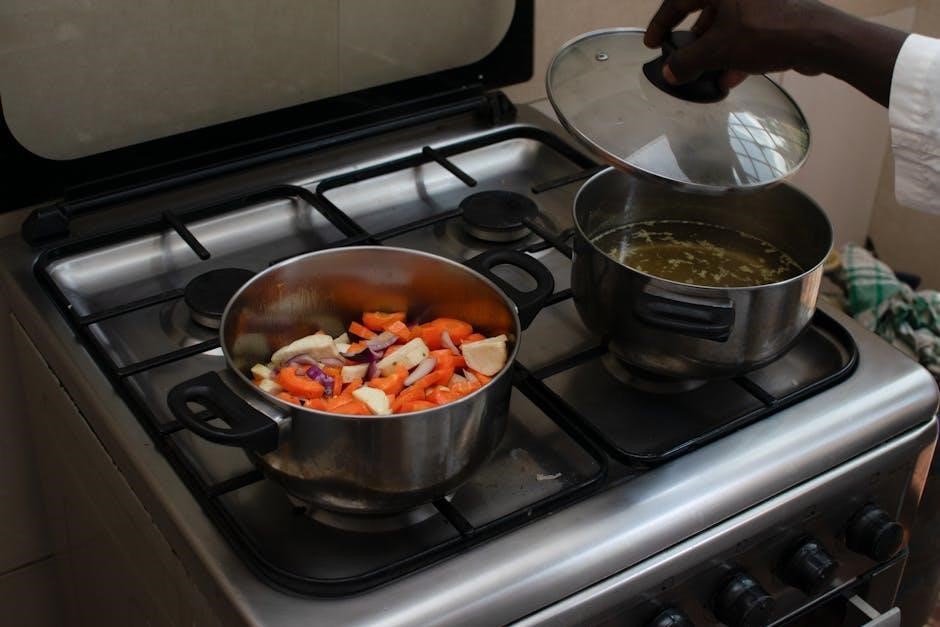
Features & Settings
Explore advanced functionalities! Your Kenmore gas range boasts a digital clock, timer, intuitive oven control panel, and a convenient self-cleaning cycle for ease of use.
Digital Clock & Timer
Setting the Clock: Your Kenmore gas range features a user-friendly digital clock for accurate timekeeping. To set the clock, typically you’ll press and hold the ‘Clock’ button until the hour display flashes. Use the number pads to enter the correct hour, then press ‘Clock’ again. Repeat this process for the minutes. Ensure you’ve selected the correct AM or PM setting.
Utilizing the Timer: The timer function allows you to conveniently track cooking times. Press the ‘Timer’ button, then enter the desired cooking time using the number pads. Press ‘Start’ to activate the timer. A visual display and audible alarm will alert you when the set time has elapsed. The timer can operate independently of the oven or surface burners, providing versatile timing options for all your culinary needs.
Oven Control Panel Overview
Key Components: The Kenmore gas range control panel is designed for intuitive operation. You’ll find dedicated function buttons for ‘Bake’, ‘Broil’, and ‘Convection Bake’, allowing easy selection of your desired cooking mode. Number pads facilitate precise temperature setting and timer input. A digital display clearly shows the set temperature, timer countdown, and clock time.
Mode Indicators: Illuminated indicators signal when the oven is actively heating or when the self-cleaning cycle is in progress. The ‘Start’ button initiates the selected cooking function, while the ‘Clear/Off’ button cancels operations or turns off the oven. Familiarize yourself with these controls to maximize your cooking experience and ensure safe, efficient operation of your Kenmore gas range.
Self-Cleaning Cycle
Convenience Feature: Your Kenmore gas range features a self-cleaning cycle for effortless oven maintenance. This high-heat process burns off food residue, eliminating the need for manual scrubbing. Before initiating, remove oven racks, cookware, and any loose debris. Ensure proper ventilation by opening windows, as the cycle produces odors.
Cycle Duration & Safety: The self-clean cycle typically lasts several hours, during which the oven door automatically locks for safety. Do not attempt to open the door during operation. Once complete, allow the oven to cool completely before unlocking and removing any ash residue. Always supervise children and pets during and after the self-cleaning process.
Preparing for Self-Clean
Essential Steps: Prior to initiating the self-clean cycle on your Kenmore gas range, thorough preparation is crucial for optimal results and safety. Begin by removing all oven racks, baking stones, thermometers, and any aluminum foil. Wipe up any large spills or loose food particles from the oven floor to minimize smoke and odor during the high-heat process.
Door & Ventilation: Ensure the oven door can fully close and seal. Open windows in your kitchen to provide adequate ventilation, as the self-clean cycle generates fumes. Remove any items stored within the oven, and double-check for forgotten utensils. A clean oven ensures a more efficient and safer self-cleaning experience.
Self-Clean Cycle Duration & Safety
Cycle Length: The self-clean cycle on your Kenmore gas range typically lasts between 2 to 4 hours, depending on the level of soil. Avoid interrupting the cycle once it has begun, as this could damage the oven’s control system. The oven door will automatically lock during the process and remain locked until it cools sufficiently.
Safety Precautions: Never attempt to force the oven door open while it’s locked. Keep children and pets away from the oven during the self-clean cycle due to the extremely high temperatures. Be aware that fumes may be released, so ensure proper ventilation. After the cycle completes, allow the oven to cool completely before removing any ash residue.
Troubleshooting Common Issues
Facing problems? This section addresses frequent concerns like burners failing to ignite, ovens not heating, error codes, and handling a gas smell safely.
Burner Won’t Light
Troubleshooting a non-igniting burner requires a systematic approach. First, ensure the gas supply is connected and turned on. Verify the igniter is clicking; if not, a faulty igniter or a problem with the spark module could be the cause.
Check if the burner ports are clogged with food debris – a common issue. Carefully clean them with a thin wire or needle. Also, confirm the burner cap is correctly positioned; misalignment can prevent ignition.
If the igniter clicks but the gas doesn’t light, there might be an issue with the gas valve. Do not attempt to repair the gas valve yourself; contact a qualified technician for assistance. A persistent failure to light indicates a potential safety hazard requiring professional attention.
Oven Not Heating
If your Kenmore gas range oven isn’t heating, several factors could be at play. Initially, verify the oven is set to the correct baking or broiling mode and the temperature is appropriately programmed using the control panel. Ensure the door is fully closed, as a slightly ajar door can trigger a safety shut-off.
Inspect the bake element (if applicable) for any visible damage or breaks. A faulty heating element is a common cause. Also, check the igniter within the oven; a failing igniter won’t initiate gas flow.
If these checks don’t resolve the issue, a problem with the gas valve or the oven control board may exist. Contact a qualified appliance repair technician for diagnosis and repair – do not attempt to fix these components yourself.
Error Codes & Their Meanings
Your Kenmore gas range utilizes error codes to signal potential issues, aiding in troubleshooting. While specific codes vary by model (like 74343), a consistent display indicates a problem requiring attention. Unfortunately, detailed error code lists aren’t readily available publicly for all Kenmore ranges.
However, common errors often relate to the igniter, gas supply, or temperature sensor. A flashing “F” or a numerical code (e.g., E1, E2) usually signifies a fault. Refer to the complete manual (available through resources like Manualzilla – identifier manualzilla-id-7020551) for a comprehensive list specific to your model.
If you encounter an error code not listed in the manual, or if the problem persists, contact Kenmore customer support or a qualified appliance repair technician for assistance.
Gas Smell – What to Do
If you detect a gas odor, safety is paramount! Immediately extinguish any open flames or ignition sources – do not operate any electrical switches, including lights. Do not attempt to locate the source of the leak yourself.
Evacuate everyone from the building and proceed to a safe location. Once outside, contact your local gas company or the fire department from a neighbor’s phone or mobile device. Do not use your phone inside the building.
Allow trained professionals to investigate and resolve the issue before re-entering. Ensure proper ventilation after the leak is repaired, and have your Kenmore range (model 74343) inspected by a qualified technician.
Maintenance & Care
Regular cleaning extends your Kenmore gas range’s life! This section details how to clean the cooktop, oven interior, and racks for optimal performance.
Cleaning the Cooktop
Maintaining a clean cooktop is crucial for efficient operation and appearance. After each use, allow the cooktop to cool completely before cleaning. For everyday spills and splatters, a simple wipe-down with a damp cloth and mild dish soap is usually sufficient. Avoid abrasive cleaners, scouring pads, or steel wool, as these can damage the surface.
For stubborn, baked-on messes, consider using a cooktop cleaning cream specifically designed for gas ranges. Apply the cream, let it sit for a few minutes as directed on the product label, and then gently scrub with a non-abrasive sponge. Rinse thoroughly with clean water and dry with a soft cloth.
Remove and wash the burner grates and caps separately with warm, soapy water. Ensure they are completely dry before replacing them on the cooktop. Regularly inspect the burner ports for any blockages and clear them as needed.
Cleaning the Oven Interior
Regular cleaning keeps your Kenmore oven performing optimally. For light cleaning, wipe down the interior with a damp cloth and mild dish soap after each use, avoiding abrasive cleaners. For more thorough cleaning, especially after spills or heavy use, utilize the self-cleaning cycle – detailed in a separate section of this manual.
If you prefer manual cleaning, remove oven racks and soak them in warm, soapy water. Inside the oven, apply a non-abrasive oven cleaner, following the manufacturer’s instructions carefully. Allow sufficient dwell time, then wipe clean with a damp cloth, rinsing thoroughly to remove all cleaner residue.
Avoid spraying cleaner directly onto the oven’s heating elements or gas burner. Always ensure the oven is cool before cleaning.
Replacing Oven Racks
Oven racks may need replacement due to rust, damage, or wear over time. Before attempting replacement, ensure the oven is completely cool and disconnected from the power source for safety. Gently slide the old rack out of its supports within the oven cavity.
New Kenmore oven racks can be purchased from authorized appliance parts retailers, specifying your model number (e.g., 74343) to ensure compatibility. Carefully slide the new rack into the desired rack position supports, ensuring it sits securely and level.
Avoid forcing the rack, as this could damage the oven’s interior. Regularly cleaning the racks can extend their lifespan and reduce the need for frequent replacements.
Long-Term Storage Instructions
If storing your Kenmore gas range for an extended period, proper preparation is crucial. First, thoroughly clean the cooktop and oven interior to prevent odors and pest attraction. Disconnect the gas supply at the shut-off valve and cap the line securely.
Remove all removable parts, like oven racks and burner grates, storing them separately in a dry place. Secure the oven door closed to prevent damage during storage. Cover the range with a breathable cloth to protect it from dust and scratches.
Store in a dry, well-ventilated area, avoiding extreme temperatures or humidity. Before resuming use, inspect gas connections for leaks and ensure proper ventilation.